Increasing overall experience and retention for Client renewals
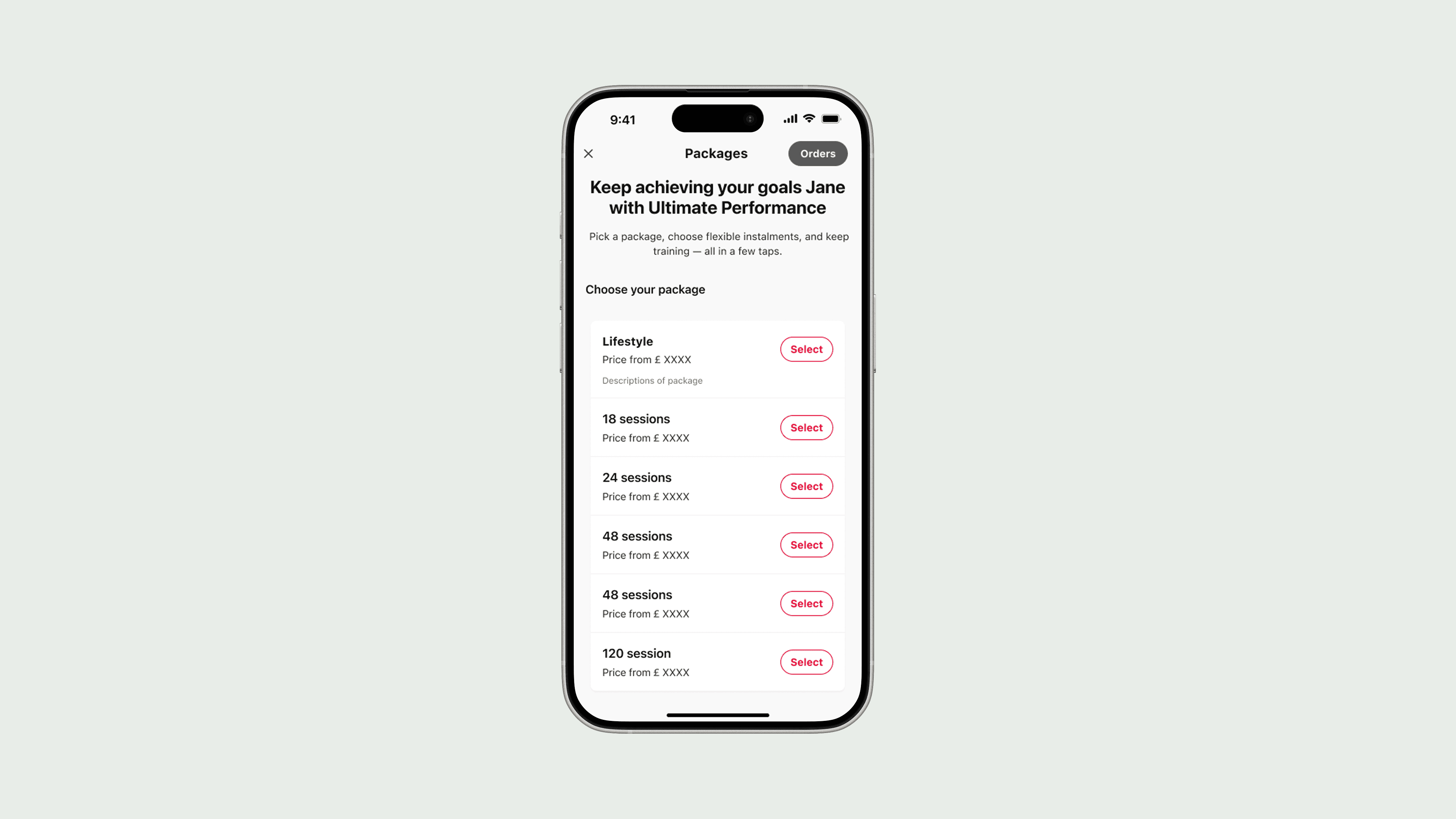
34%
25%
8.9*
Context
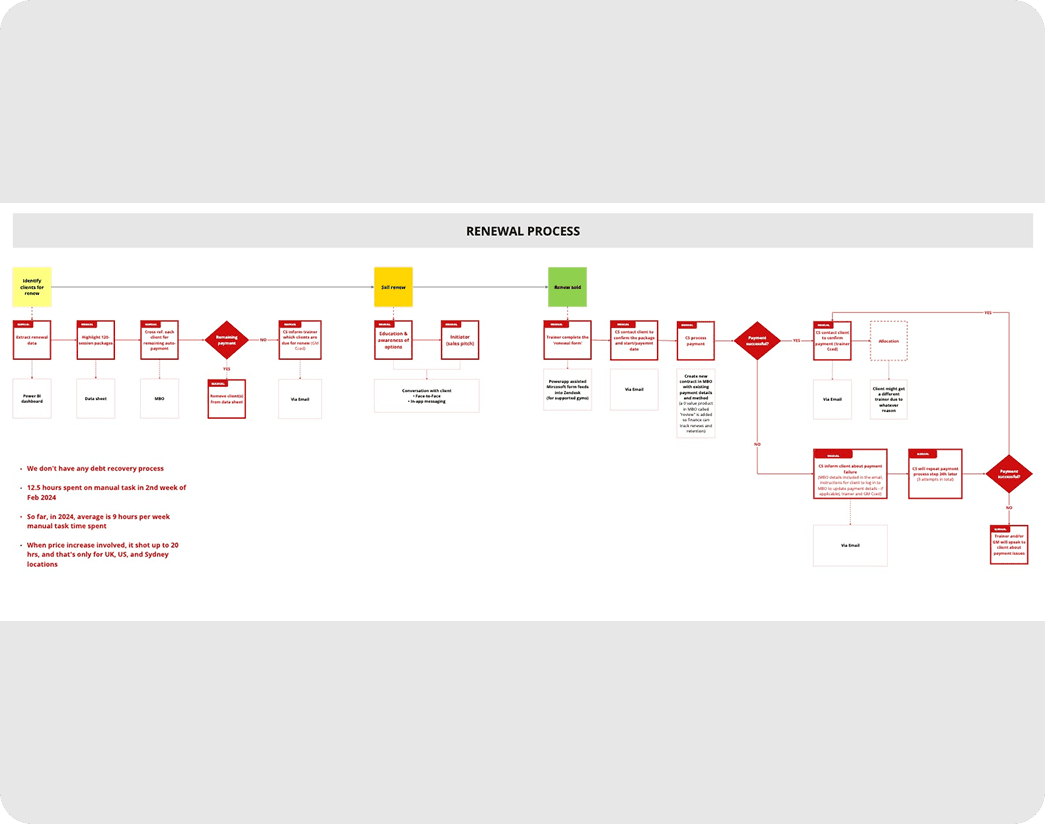
Renewing a personal training package was a lengthy, manual, and fragmented process for both clients and trainers. The lack of automation, tracking, and consistency led to operational inefficiencies, inconsistent client experiences, and limited visibility into overall renewal performance.
The process heavily relied on manual communication, inconsistent tools (e.g., emails, third-party systems), and limited data—making it hard to measure success or identify drop-off points in the renewal funnel.
This disjointed journey negatively impacted client retention and made it harder to foster long-term relationships with clients.
Approach
Focus on refining the existing manual renewal journey through incremental improvements. This low-disruption approach builds on current systems, enables quick wins using existing resources, and overlaps with ongoing onboarding improvements. While faster to implement, it offers limited transformation and may retain manual inefficiencies.
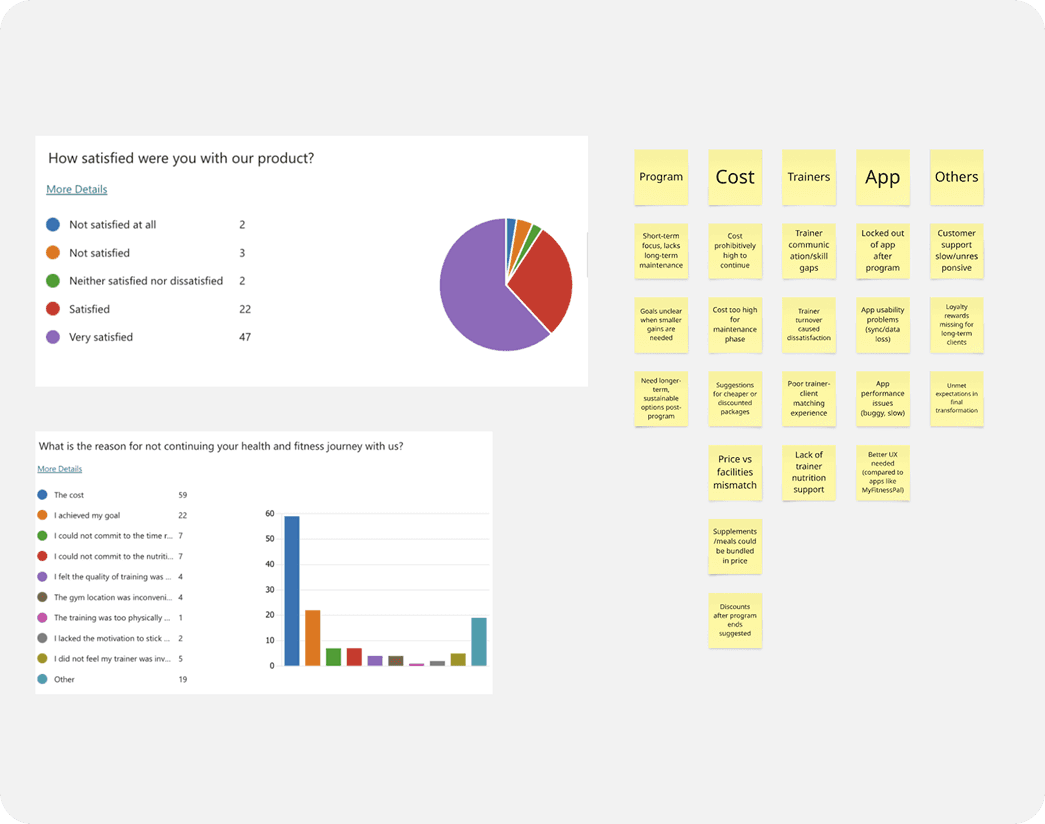
We mapped the end-to-end renewal journey and used client interviews, feedback from non-renewals, and behavioural data to uncover root causes. Key insights emerged:
Renewal issues often stemmed from the onboarding phase, where early friction points (manual setup, fragmented communications, unclear package terms) created compounding effects later.
Clients who had a smoother, more structured onboarding were more likely to renew with less intervention.
We then defined research questions across:
Client preferences and patterns
Renewal decision factors
Barriers to renewal
Feedback from non-renewals
UX pain points in the renewal journey
This fed directly into our design and service hypotheses.

What role did I play
Working within a team of other designers, I co-led the discovery phase using a human-centred design framework. Our goal was to replace a full-week design sprint with a more scalable approach that would surface current challenges across the business. We engaged stakeholders across customer service, gym managers, regional managers, finance, and tech to align on shared goals and uncover the systemic issues influencing the renewal experience.
Through workshops, mapping, and interviews, we helped stakeholders connect operational pain points with client-facing friction and used this alignment to drive clarity around what success should look like for the renewal journey.
Things to consider
Feasibility Assessment
A full feasibility study is required to assess whether the business is ready for an auto-renewal system. This includes reviewing existing systems, estimating costs, and identifying technical or operational challenges that may arise.
Technology Infrastructure Upgrade
Upgrading the current tech stack is essential to support automated renewals. This may involve enhancements to the Transform app, the website, and backend systems to ensure secure, reliable, and frictionless transactions.
Client Communication Strategy
Clients must be kept informed through a clear and thoughtful communication plan. Messaging should explain the benefits, outline any required actions, and build trust around data privacy and billing security to ensure a smooth transition.
Staff Training and Change Management
Training programs must be developed to prepare staff across all departments. Teams need to understand the new processes and be supported through change management strategies that address questions or resistance.
Legal and Compliance Considerations
Legal and compliance teams should review all aspects of the auto-renewal setup to ensure it adheres to relevant regulations and industry standards. This helps protect the business and ensures a compliant, risk-free rollout.
Pilot Program Implementation
A pilot should be run with a small group of clients to validate the system in a real-world setting. This allows the team to gather insights, address early issues, and refine the experience before launching at scale.
Data Security and Privacy Measures
Robust data protection protocols are crucial to safeguard client information. Clear policies should be in place to reassure clients about how their personal and payment data is stored, used, and secured.
Performance Metrics Definition
Define clear KPIs to measure success—such as renewal rates, client satisfaction, and system reliability. This data will help track effectiveness and guide future iterations of the auto-renewal process.
Collaboration with Technology Partners
Work with external tech partners or vendors who specialise in subscription and renewal systems. Their expertise can help ensure smooth implementation and alignment with internal infrastructure and goals.
Client Support and Education
Comprehensive support and educational content should be created to guide clients through the change. Accessible help channels and proactive communication will reduce confusion and increase confidence in the new system.




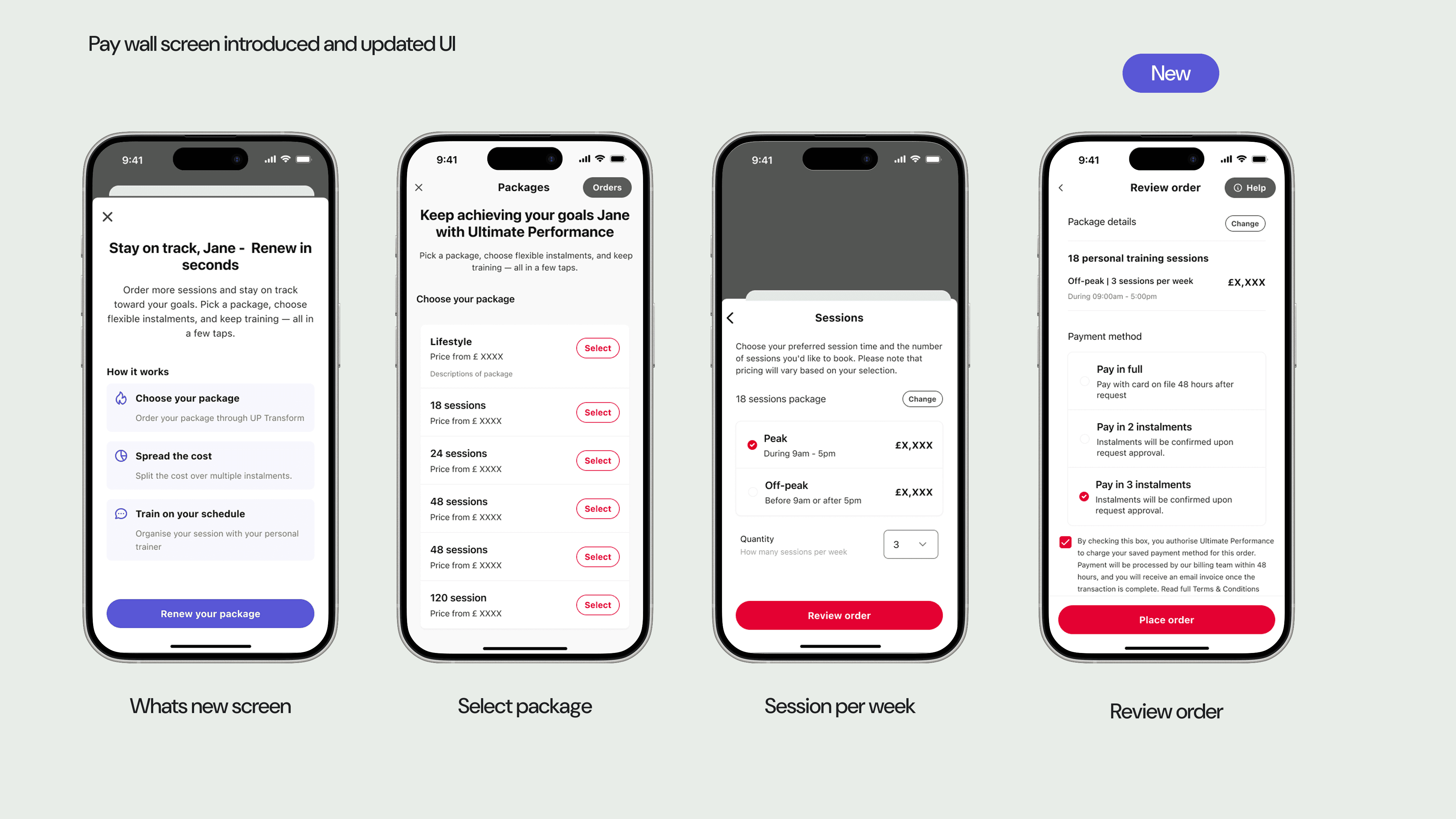
The road to beta and iterative testing
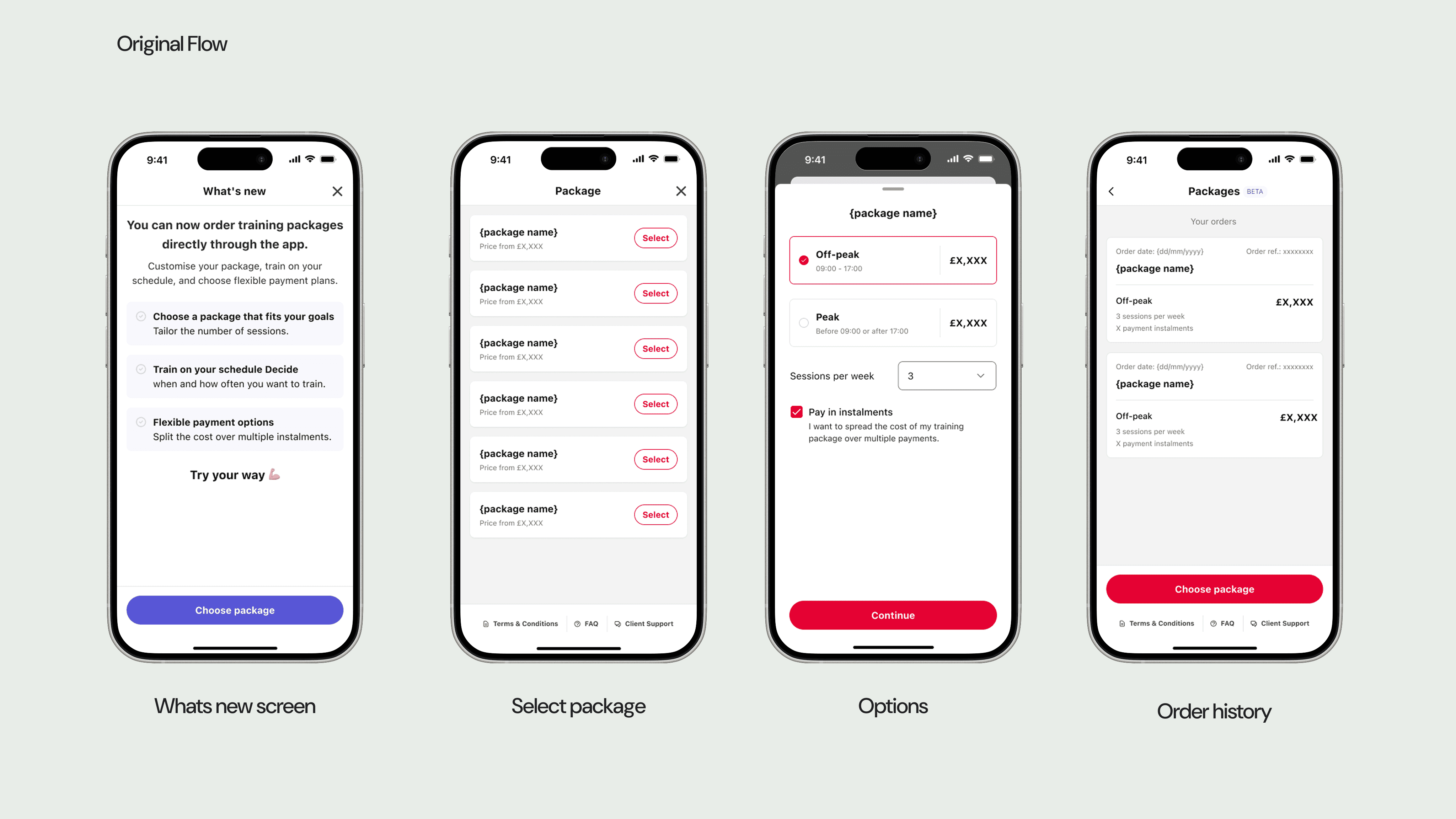
As part of our initial MVP rollout, we released manual renewal improvements exclusively to three Washington gym locations: Dupont Circle, Metro Centre, and Bethesda. This allowed us to validate changes in a live setting before wider deployment.
📊 36% conversion rate increase in renewal engagement across these gyms.
We observed that simplifying the renewal prompts and improving clarity in package options led to a measurable uptick in user action. In particular, Off-Peak packages at Metro Centre and Dupont Circle showed higher responsiveness, with users opting for mid-sized session bundles (24–48 sessions) more consistently.
💰 $103,000+ in total renewal revenue was generated during this limited test period.
This included multiple high-value renewals such as:
A 120-session Peak package at Bethesda worth $24,000
Several Off-Peak bundles (36–48 sessions) averaging $6,840–$9,120 per client
📈 CLV increased by an estimated 18% for returning clients in Washington D.C.
By improving communication and reducing friction in the manual renewal journey, we not only drove more renewals but encouraged larger package commitments—directly boosting lifetime value.
This test validated that even without automation, meaningful improvements in the manual process could drive significant revenue and retention gains. These insights directly informed the roadmap for a hybrid approach while laying the groundwork for auto-renewal functionality in future phases.